
The story of this place
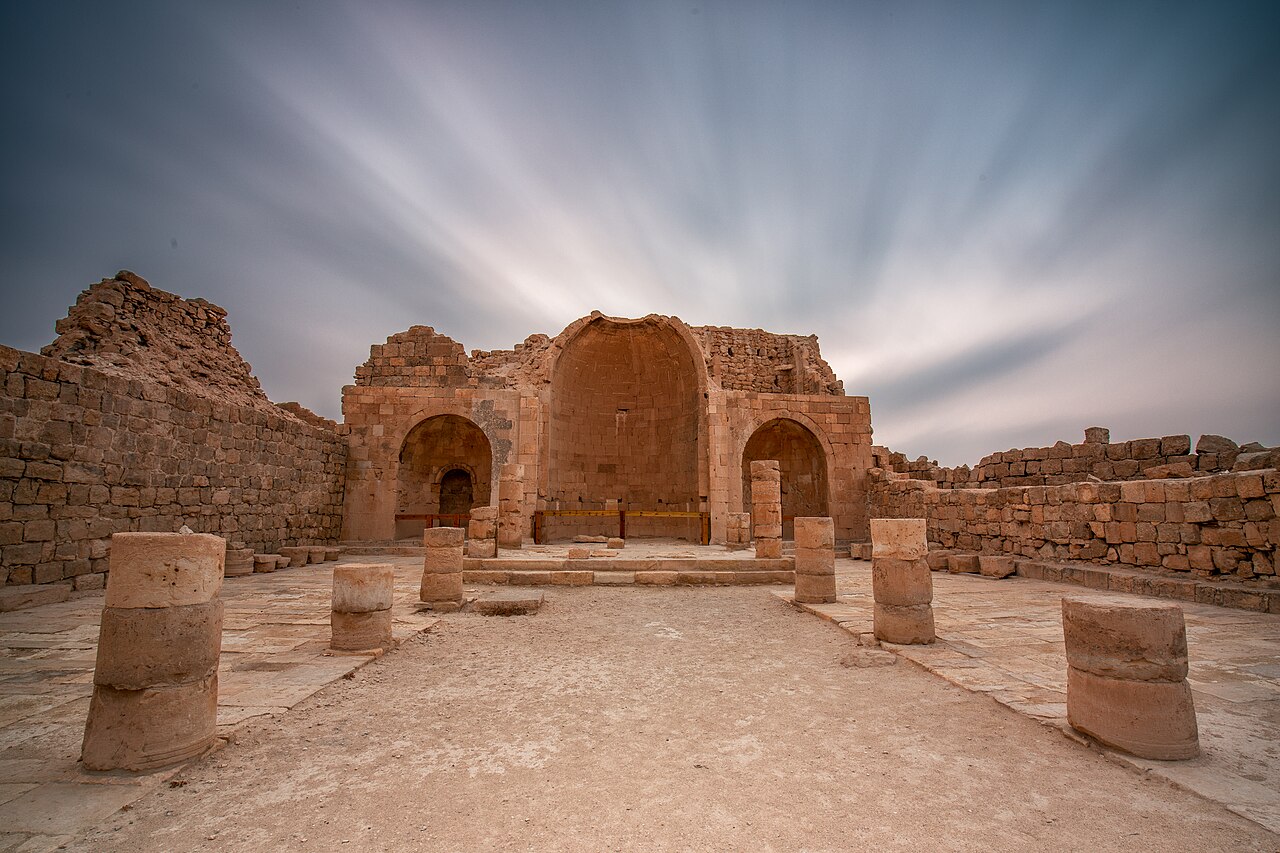
The surviving town is strongly associated with the Byzantine period, when churches, households and agricultural production shaped local life. Its inclusion in the UNESCO Incense Route listing places it within a wider regional history, but does not mean every standing building served a caravan function.
What to notice
Compare the churches, houses and water-collection features. Their arrangement shows a community with religious, domestic and economic needs. The relationship between buildings and the surrounding agricultural landscape is more revealing than treating the ruins as an abandoned film set.
Planning a visit
Allow for exposed walking and confirm the condition of the approach and visitor facilities before departure. Stay out of unstable structures even where the open layout appears informal. Avdat offers a useful comparison in a different topographic setting; visiting both works best with time for the drive and a break.
Continue exploring
These places offer a geographical or historical connection. They are reading suggestions, not a pre-checked one-day route.
Sources & further reading
Editorial review: 20 November 2026. This is a researched introduction, not a report of an on-site inspection. Historical sources do not confirm current opening or access; check with the responsible operator before travelling.