

The story of this place
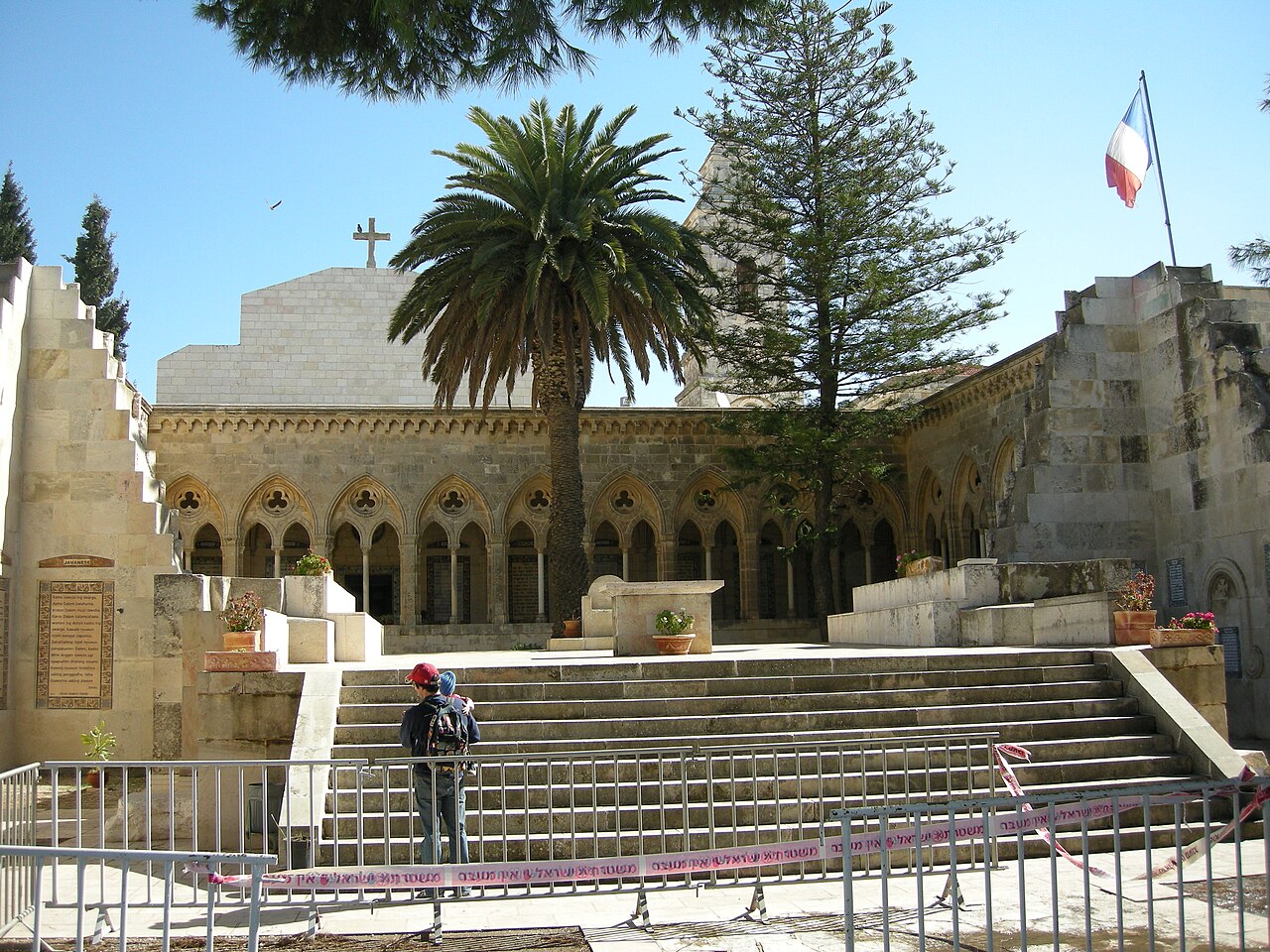
The site is associated in Christian tradition with Jesus teaching his disciples. Its history includes the early church of the Eleona, later destruction and a Carmelite religious presence. The modern visitor encounters both ruins and a devotional setting, so the age of a wall or decoration should not be assumed from the antiquity of the tradition.
What to notice
Compare the multilingual prayer panels with the surviving architectural remains. The translations make the sanctuary particularly meaningful for groups whose members pray in different languages. They also offer a useful pause in a day otherwise dominated by historical dates and crowded interiors.
Planning a visit
Check the sanctuary's own visiting arrangements, especially when planning prayer rather than a short cultural visit. Allow time to find a particular language without obstructing others. Nearby Ascension sites have their own traditions and entrances; they are not simply additional rooms in this complex.
Continue exploring
These places offer a geographical or historical connection. They are reading suggestions, not a pre-checked one-day route.
Sources & further reading
Editorial review: 20 November 2026. This is a researched introduction, not a report of an on-site inspection. Historical sources do not confirm current opening or access; check with the responsible operator before travelling.