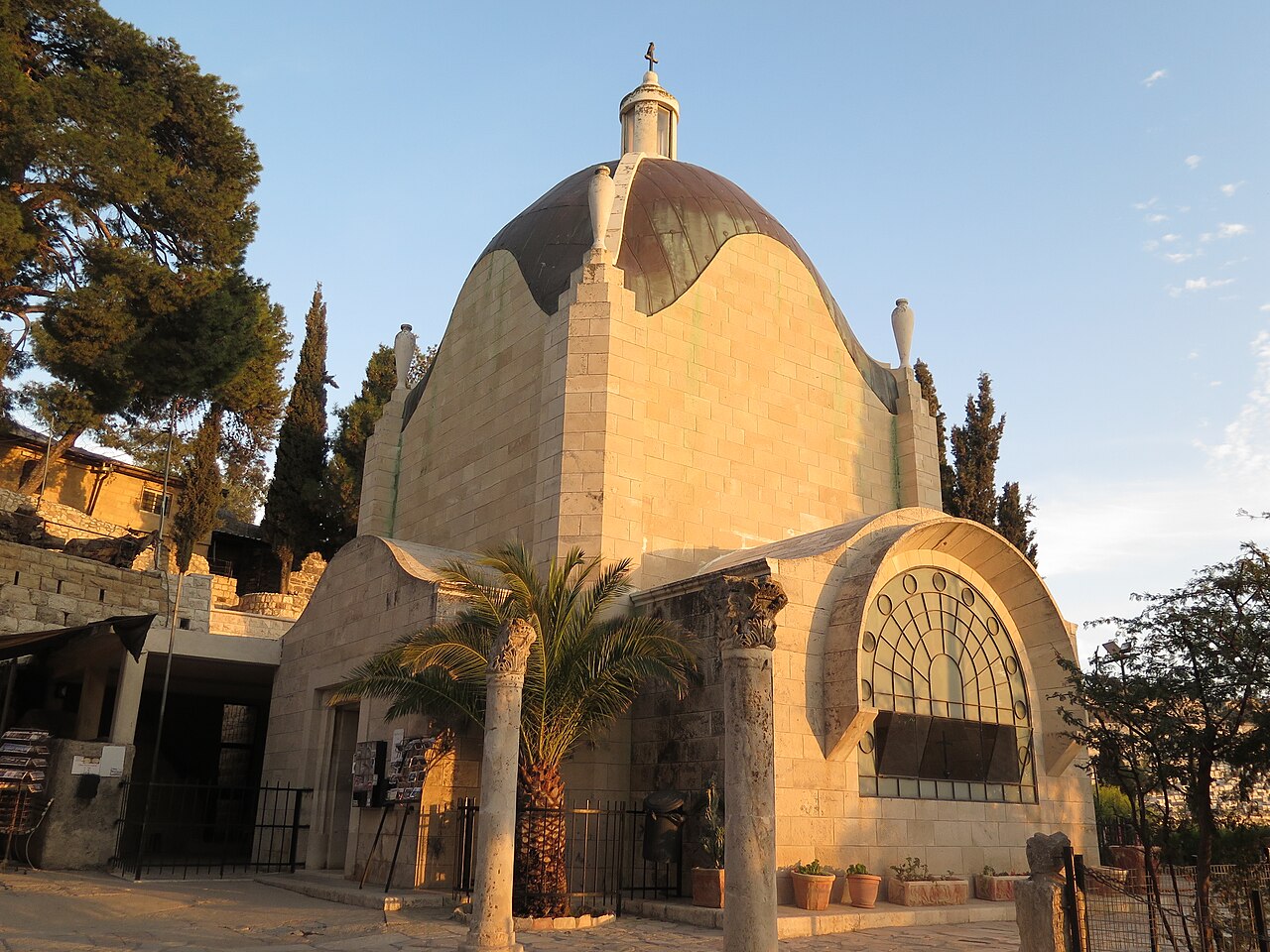

The story of this place
The name means that the Lord wept. The present chapel was designed by Antonio Barluzzi in the twentieth century, while archaeological work on the property uncovered much older burial remains and evidence of a Byzantine monastery. Those different layers should not be collapsed into a claim that the present building dates to the Gospel period.
What to notice
The window looking towards Jerusalem is an important part of the chapel's design. Take time to understand the relationship between the view and the event being commemorated, rather than treating it only as a photograph. Where interpretation is available, the archaeological material adds a second story about burial and settlement on the slope.
Planning a visit
This stop works well within a Mount of Olives walk. Decide beforehand whether the route is uphill or downhill and how everyone will handle sloping paths. A visit during worship requires a quieter pace than a viewpoint stop, and group services should be arranged with the custodian.
Continue exploring
These places offer a geographical or historical connection. They are reading suggestions, not a pre-checked one-day route.
Sources & further reading
Editorial review: 20 November 2026. This is a researched introduction, not a report of an on-site inspection. Historical sources do not confirm current opening or access; check with the responsible operator before travelling.