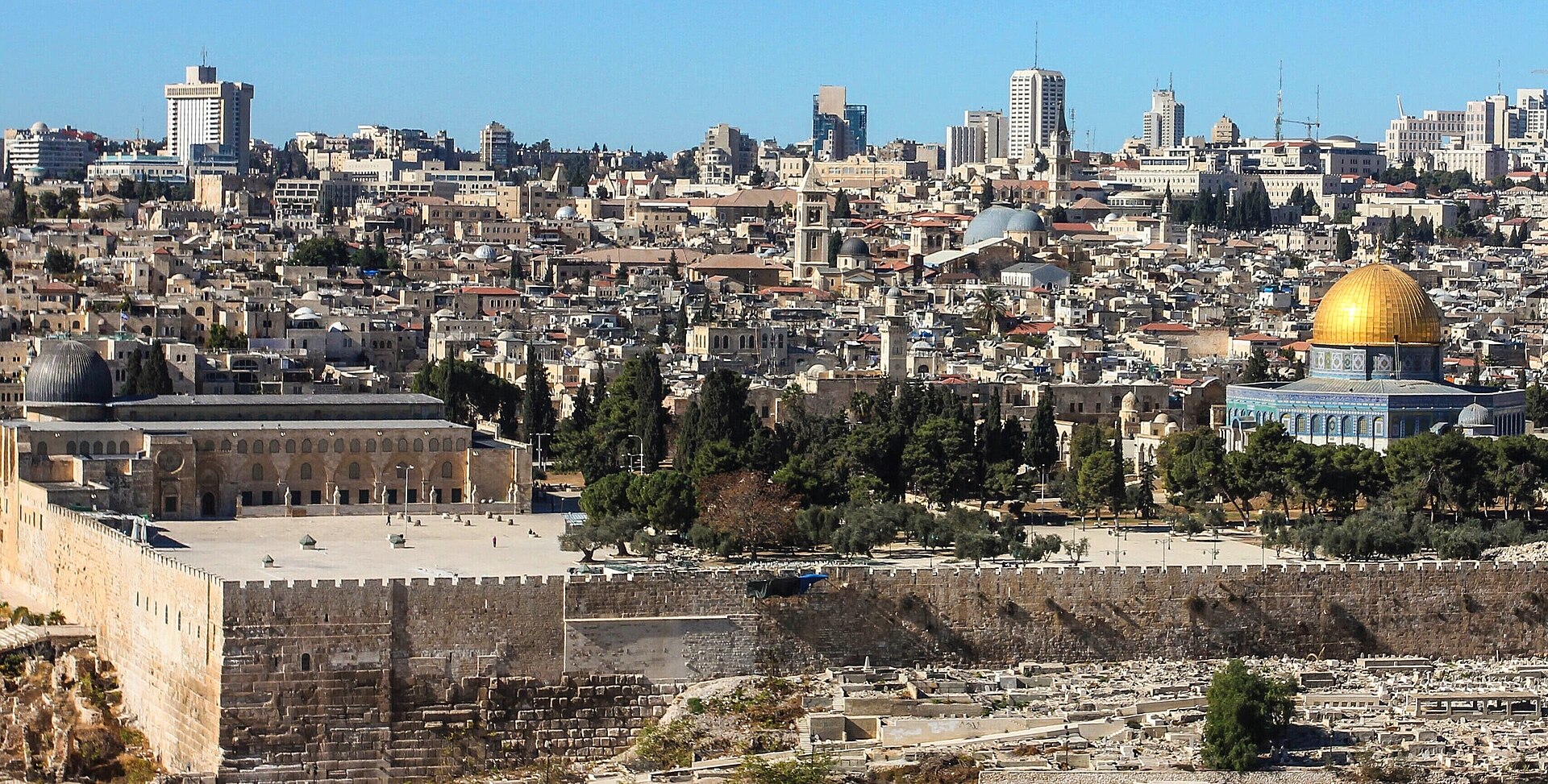

By Israel Travel Guide · Sources checked 20 November 2026. This is a researched historical introduction, not a report of a new archaeological discovery. The header photograph shows modern Jerusalem.
Did Vikings reach the Holy Land?
There is evidence connecting Viking-Age Scandinavia with Jerusalem, and well-documented Scandinavian visits in the following century. The evidence does not all mean the same thing: an inscription commemorating a journey is different from a chronicle describing a royal expedition. Neither should become a story about an otherwise unproven Viking settlement in Jerusalem.
For a visitor, the useful starting point is a question: what does each source actually establish? This article follows a Swedish memorial stone, a Norwegian king and the Jerusalem churches that give their stories a geographical setting.
Viking, Scandinavian or crusader?
“Scandinavian” describes an origin; it does not tell us whether someone travelled as a raider, trader, pilgrim or soldier. The National Museum of Denmark dates the Viking Age in its Danish overview to about 800–1050 and describes both overseas expeditions and the replacement of the old religion by Christianity. A Christian traveller from this period is therefore not a contradiction. Sigurd’s journey in 1110 belongs to a later medieval setting.
A Swedish stone that names Jerusalem
Runestone U 136 stands at Broby bro in Täby, Sweden. John Insley’s Heidelberg University account dates it to approximately 1020–1050. A woman called Estrid commissioned the memorial for her husband, Östen, also known as Eysteinn. Jerusalem appears in the inscription as Iorsaliʀ; his death is associated with the lands of the Greeks, understood here as the Byzantine world.
This is a surviving inscription from the period, not simply a story written centuries later. It is also a very short text. The Swedish National Heritage Board presents the journey as a pilgrimage, while the Runor database’s English translation uses the word “attacked”. Insley’s rendering describes an intended journey to Jerusalem. Those differences matter: the exact nature of the expedition, and whether this wording alone establishes a completed visit, should not be presented as settled.
What the stone securely gives us is a named Scandinavian traveller linked to Jerusalem in an eleventh-century memorial. It does not supply a detailed route or establish a Viking conquest of the city. The stone itself is in Sweden, not on display in Jerusalem.
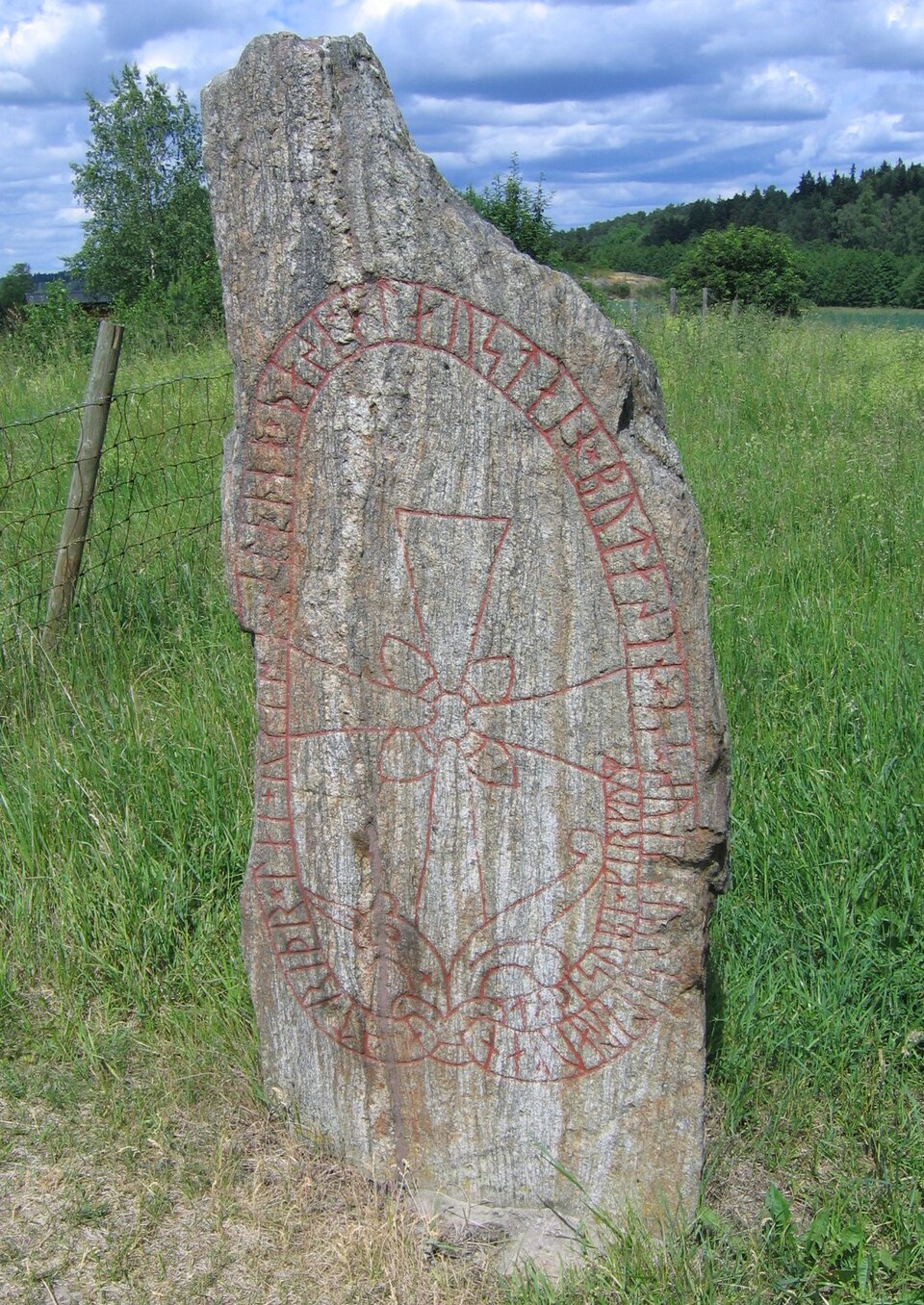
U 136 at Broby bro, Sweden. The photograph shows the actual memorial stone; it is not an illustration of a monument in the Holy Land.
Photo: I, Berig · CC BY 2.5 · Wikimedia Commons original and licence. Resized Wikimedia thumbnail; no retouching. Full photo credits.

Sigurd’s journey: a clearer visit in 1110
The Norwegian king Sigurd I provides a different kind of evidence. His expedition reached the Holy Land in 1110. Historian Juan Rothenhäusler examines the journey through Old Norse, Latin and Arabic sources, rather than treating the later saga as the only account. The expedition combined religious aims with warfare; its place between Viking voyaging traditions and crusading is itself a subject of historical discussion.
Archaeologist Denys Pringle records Sigurd’s pilgrimage to the Holy Sepulchre in Jerusalem and to the Jordan baptismal site near Jericho before the attack on Sidon. His references include Snorri Sturluson, Albert of Aachen and Fulcher of Chartres. Sigurd then helped Baldwin I capture Sidon in 1110. Sidon is in present-day Lebanon: that military episode should not be relocated to Jerusalem or described as a conquest of modern Israel.
“A Norwegian crusading king visited Jerusalem” is thus a firmer description of this episode than “Vikings conquered Jerusalem”. Calling Sigurd a Viking without explaining the later date hides an important distinction.
Connecting the story with Jerusalem today
The Church of the Holy Sepulchre is the strongest local connection in this article: it is a pilgrimage destination associated with Sigurd in the historical literature. Its present appearance must not be mistaken for an unchanged scene from his visit. The Custody of the Holy Land dates the dedication of the Crusader rebuilding to 15 July 1149, decades after his journey.
Use the Jerusalem travel guide to plan the wider visit, then read the church’s own history and current visitor information. Looking for the relationship between successive buildings is more rewarding than trying to identify a particular doorway or stone as something Sigurd certainly touched: the sources used here do not establish such details.
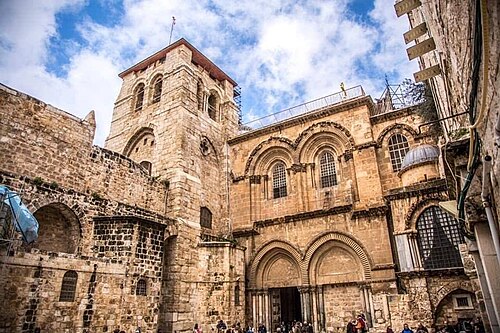
The Church of the Holy Sepulchre, photographed in 2020. This is a modern view of a much-altered pilgrimage site, not a reconstruction of its appearance in 1110.
Photo: Leen Karajeh · CC BY-SA 4.0 · Wikimedia Commons original and licence. Resized Wikimedia thumbnail; no retouching. Full photo credits.

What is established, and what is not?
- A Viking-Age connection with Jerusalem: supported by the surviving U 136 inscription, with qualifications about translation and the journey.
- A Norwegian royal visit in 1110: supported by historical accounts assessed in modern scholarship.
- A Viking colony, excavated Viking district or Viking conquest of Jerusalem: not established by the evidence presented here.
- A “Viking trail” of specific surviving buildings: this article does not claim one. The connection is a story of travel and pilgrimage, not a newly identified archaeological route.
The distinction makes the history more useful: you can recognise a real northern connection without asking the surviving evidence to tell a larger story than it can support.
Sources and how to read them
The inscription is primary evidence; its modern translations are interpretations. The academic studies below identify and compare medieval accounts. Museum and sanctuary sources supply period and building context. Historical references do not confirm present-day access.
- National Museum of Denmark — The Viking Age. Periodisation and the transition to Christianity.
- Swedish National Heritage Board — Runestones and other countries. The heritage authority’s interpretation of Östen’s journey as a pilgrimage; in Swedish.
- Runor / Scandinavian Runic-text Database — U 136. Transcription, translation and bibliographical record of the inscription. Its English translation differs from the pilgrimage interpretation.
- John Insley, Heidelberg University — A witness from the Viking Age. Dating to approximately 1020–1050 and discussion of the inscription and travel; in German.
- Juan Rothenhäusler — Sigurd I’s voyage to Jerusalem (2024). Study of the expedition comparing Old Norse, Latin and Arabic sources; English abstract, German article.
- Denys Pringle — Scandinavian Pilgrims and the Churches of the Holy Land (2021). Academic chapter; see pp. 199–201 for early journeys and Sigurd’s pilgrimage, with references to medieval sources.
- Custody of the Holy Land — The dedication of the Basilica of the Holy Sepulchre. The Crusader reconstruction and dedication in 1149.
Photographs retain their individual licences; these do not imply endorsement by the photographers or Wikimedia. See the linked file records and our photo-credit register.