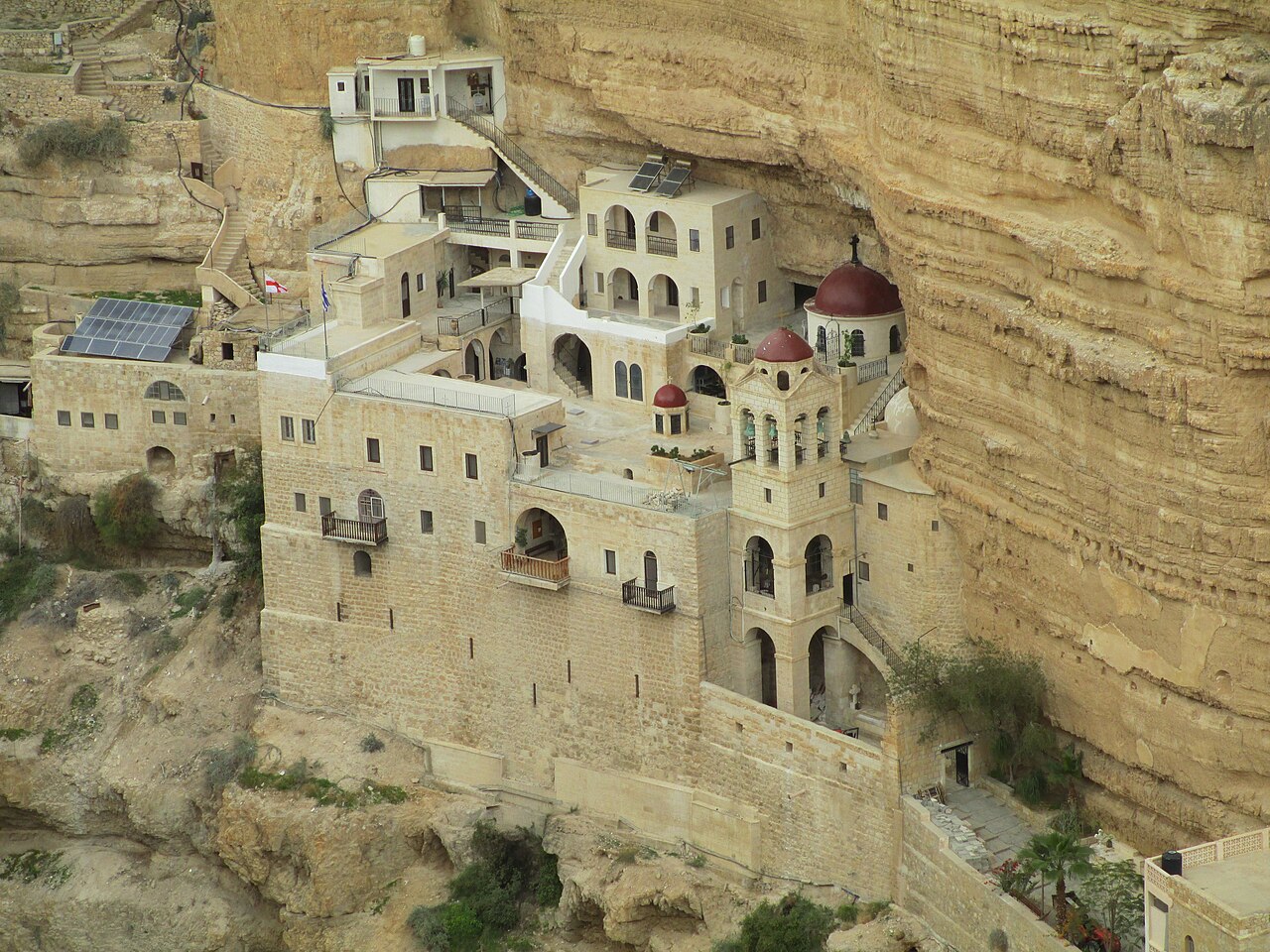

The story of this place
The religious community traces its origins to the Byzantine period and has experienced destruction, rebuilding and renewal. The present Greek Orthodox complex combines that long history with an active devotional life. Associations with biblical figures belong to the site's traditions and should be distinguished from the dates of its surviving buildings.
What to notice
From a permitted viewpoint, study the relationship between the monastery, the valley and the routes through it. An interior visit offers a different encounter with the community and its sacred spaces. A photograph from above does not convey the effort required to descend and return.
Planning a visit
This is a West Bank desert setting, not a simple roadside church visit. Confirm monastery access and the walking route with a knowledgeable local organiser. Heat, flash-flood conditions, steep paths and return transport all matter. A viewpoint-only plan may be more appropriate for some groups than reaching the entrance.
Continue exploring
These places offer a geographical or historical connection. They are reading suggestions, not a pre-checked one-day route.
Sources & further reading
Editorial review: 20 November 2026. This is a researched introduction, not a report of an on-site inspection. Historical sources do not confirm current opening or access; check with the responsible operator before travelling.