
The story of this place
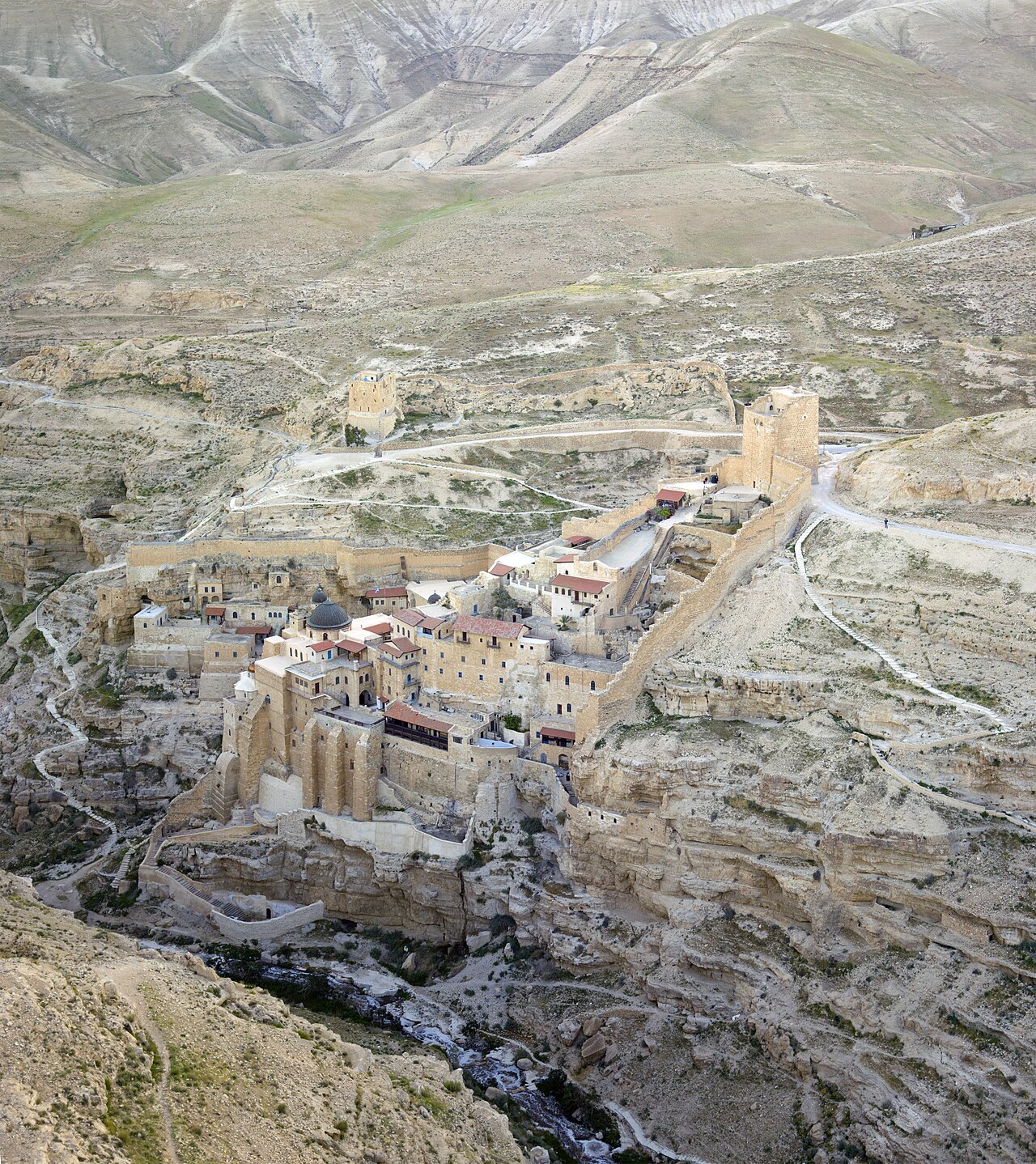
The monastery developed around Saint Sabbas and the desert monastic movement of late antiquity. Its buildings occupy a dramatic position in the Kidron Valley east of Bethlehem. Continuity of religious life, liturgy and community discipline is as important to its identity as the age of its structures.
What to notice
The setting explains the relationship between retreat, water and the surrounding desert. Exterior viewpoints can offer a meaningful understanding of the complex without entering it. Interior access follows the monastery's own practice and is not equivalent to a public museum opening.
Planning a visit
Women are not admitted to the main monastic compound; confirm any separately accessible areas rather than assuming a particular tower will be open. All visitors should verify current arrangements, dress requirements and transport. The monastery lies in the West Bank, and the remote approach deserves specific planning rather than a spontaneous detour.
Continue exploring
These places offer a geographical or historical connection. They are reading suggestions, not a pre-checked one-day route.
Sources & further reading
Editorial review: 20 November 2026. This is a researched introduction, not a report of an on-site inspection. Historical sources do not confirm current opening or access; check with the responsible operator before travelling.