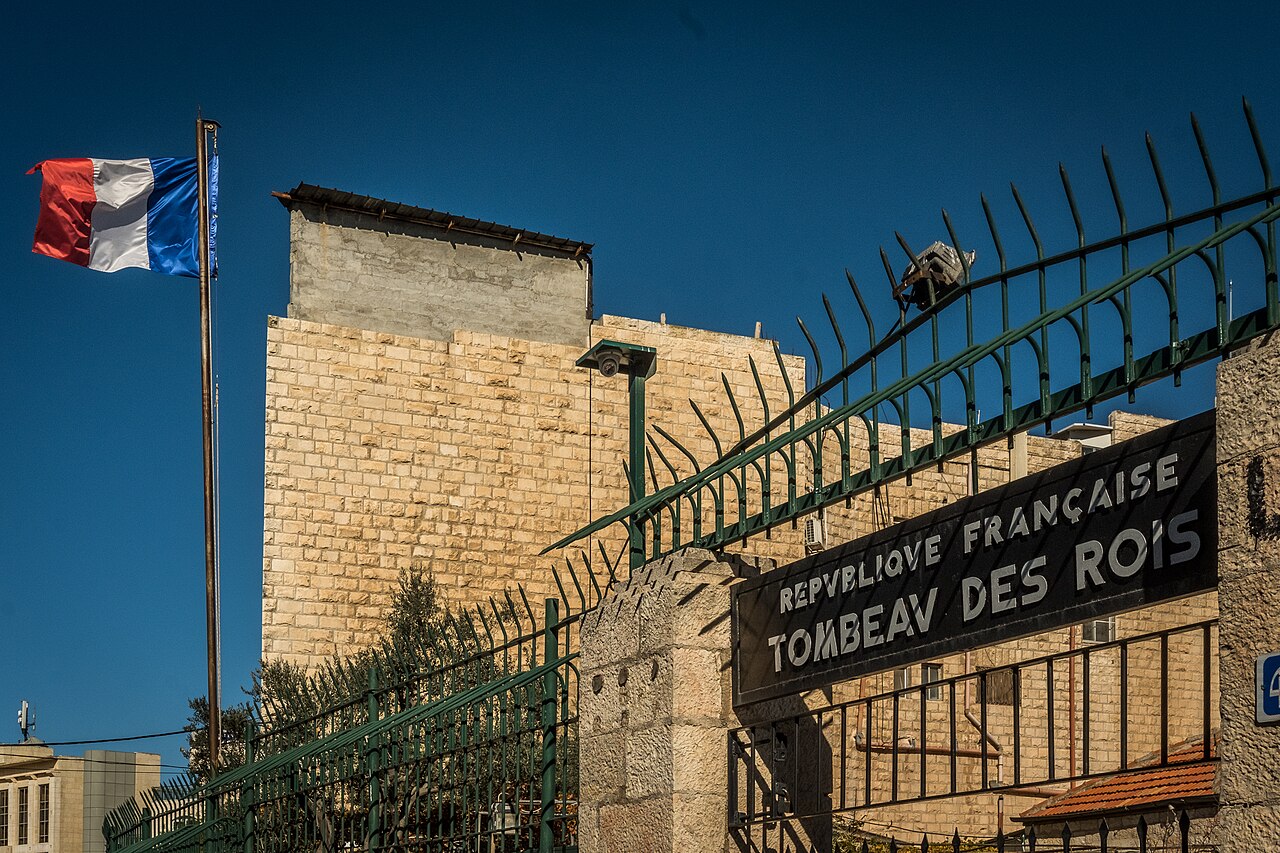

The story of this place
The rock-cut complex is commonly associated with Queen Helena of Adiabene and her dynasty, although the precise identification has been debated. It is not a confirmed collective burial place of the biblical kings of Judah. Its scale records the resources and commemorative ambitions of a wealthy ancient patron.
What to notice
The approach, courtyard and carved entrance reveal how a burial place could become an architectural statement. Consider the movement from public approach to enclosed chambers. Any accessible interior features should be interpreted within the complex's funerary purpose rather than as a general underground attraction.
Planning a visit
The site is a French national domain with specific visiting arrangements. Confirm the current official procedure before travelling; an old listing of opening days is not sufficient. Steps and restricted passages can limit the route, and access should never be assumed simply because the entrance lies on a public street.
Continue exploring
These places offer a geographical or historical connection. They are reading suggestions, not a pre-checked one-day route.
Sources & further reading
Editorial review: 20 November 2026. This is a researched introduction, not a report of an on-site inspection. Historical sources do not confirm current opening or access; check with the responsible operator before travelling.