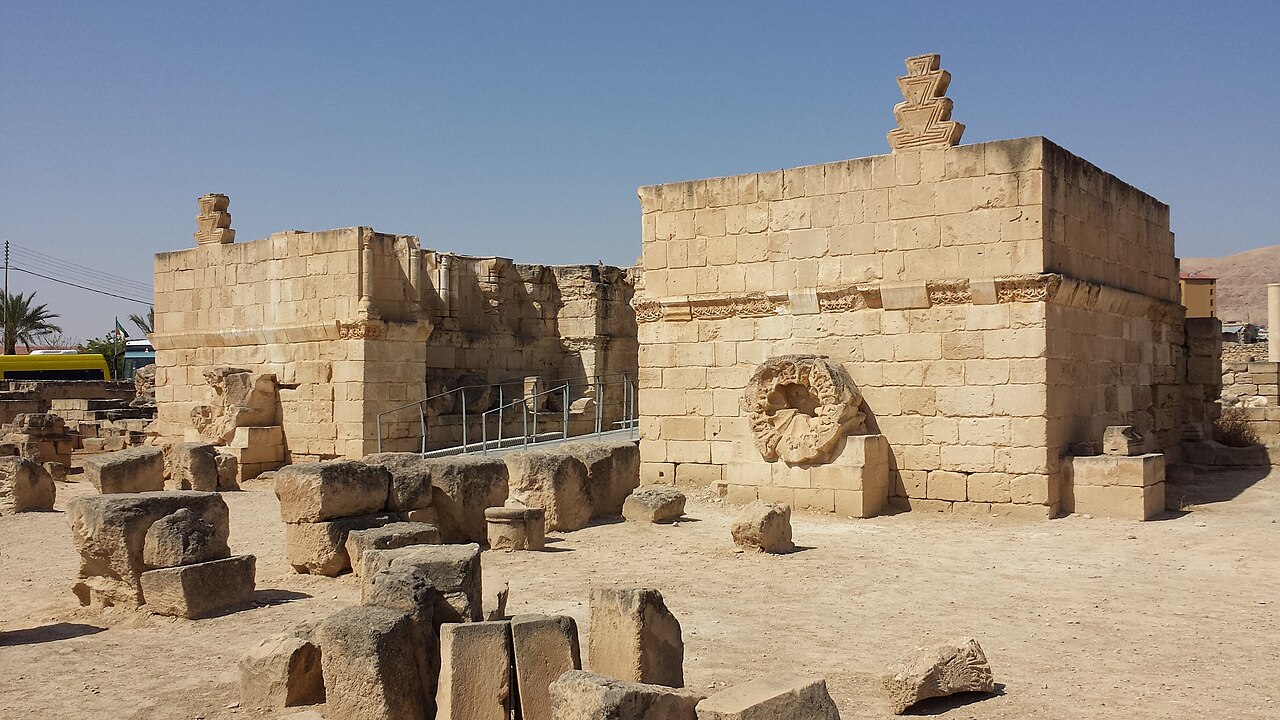

The story of this place
Built during the early Islamic period, the complex combined elite residence, bathing, religious and estate functions. Its association with the Umayyad court is clearer than every detail of patronage or destruction, which has been discussed by researchers. The remains should be read as a complex with changing use, not simply a single royal room.
What to notice
Mosaic floors, carved decoration and the arrangement of public and private spaces offer several ways into the site. The bath complex is particularly important for understanding display and reception. Modern protective structures help conserve fragile remains and form part of how visitors now experience them.
Planning a visit
Check which mosaic viewing areas and interpretive facilities are open on your date. The site is near Jericho in the West Bank, so local entry and transport arrangements require confirmation. Pair it with Tell es-Sultan to compare very different periods, rather than expecting the two places to tell one continuous architectural story.
Continue exploring
These places offer a geographical or historical connection. They are reading suggestions, not a pre-checked one-day route.
Sources & further reading
Editorial review: 20 November 2026. This is a researched introduction, not a report of an on-site inspection. Historical sources do not confirm current opening or access; check with the responsible operator before travelling.