
A passage makes sense when you find the port
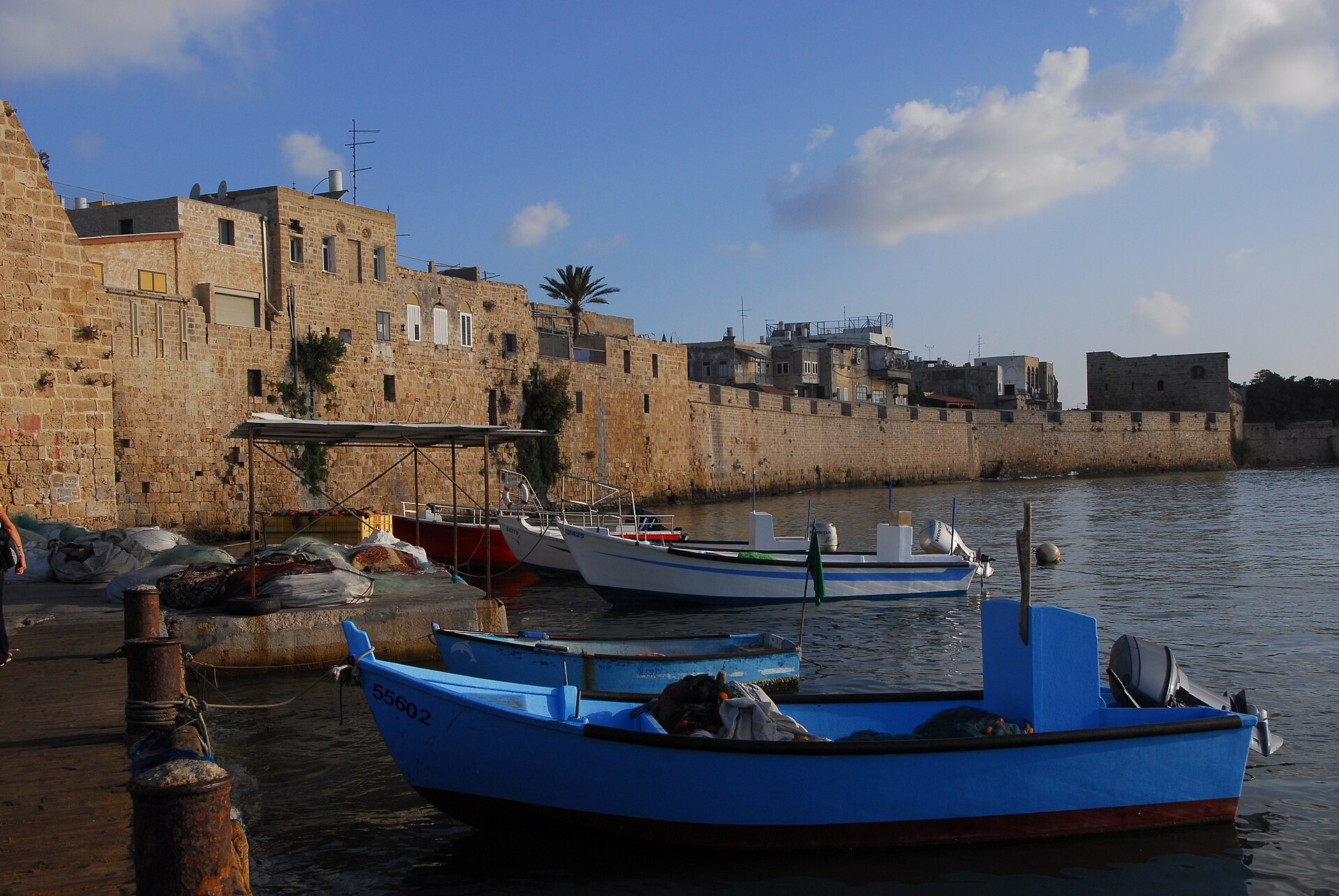
Acre’s underground history becomes easier to understand when you begin above ground. Stand by the waterfront, locate the enclosed old city, and ask how people and supplies moved between a ship and a fortified quarter. That practical question gives the tunnel more meaning than a story about a hidden treasure ever could.
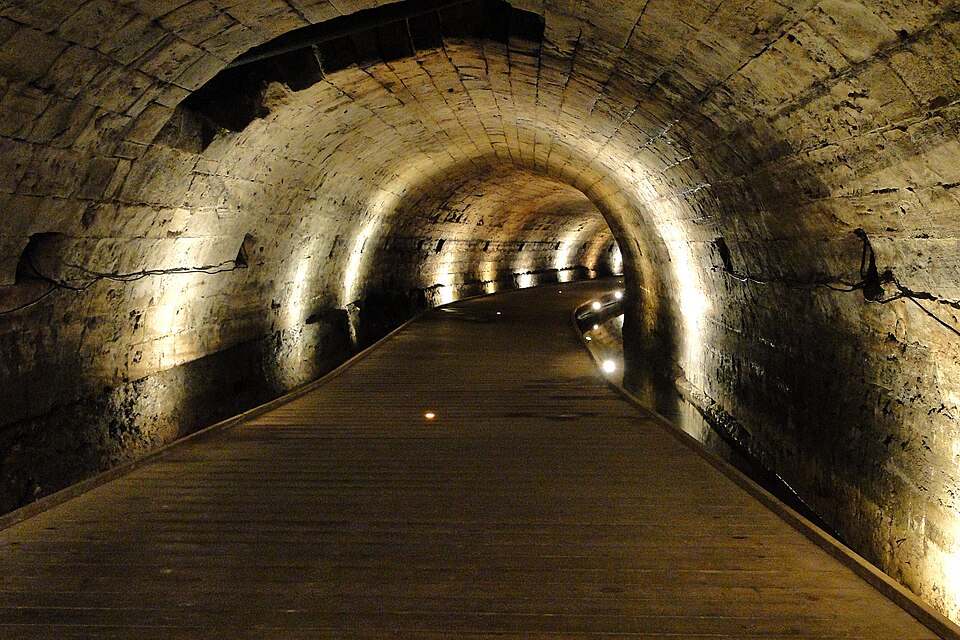
The Old Akko Development Company describes the Templars Tunnel as a passage of about 150 metres linking the order’s western fortress with the harbour. Its lower section was cut into rock; masonry and a vaulted covering completed the upper part. The tunnel was rediscovered in 1994 and opened to visitors in stages. These are specific, documented features, rather than evidence for a secret route to Jerusalem. [1]
Templars and Hospitallers: keep the two stories separate
The Templars developed a substantial quarter in medieval Acre after losing their position in Jerusalem. Their tunnel is one surviving part of that story. Do not expect the passage to lead into an intact Templar castle: the relationship to the former fortress is historical, not a promise of a complete palace visit. [1]
The celebrated Knights’ Halls belong to the Hospitaller complex. That order maintained facilities for pilgrims and the sick, and expanded its Acre headquarters after the Crusaders’ return in 1191. A combined visit is therefore a comparison of two orders, not a tour of two Templar buildings. [2]

Why the medieval city is below the modern walk
UNESCO identifies Acre’s combination of substantial Crusader remains and a later Ottoman town as central to its heritage. Buildings at different levels may tell different stories even when they are only a few steps apart. The visible streets, khans and mosques should not be treated as scenery from a single medieval moment. [3]
Try a simple observation exercise: choose one vault, one street frontage and one harbour view. For each, ask what survives, what has been restored, and what a guide is reconstructing from historical evidence. The distinction leaves room for imagination while keeping the interpretation honest.
A rewarding way to organise a visit
Build a focused walk around the tunnel, a harbour orientation and, if you want the comparison, the Hospitaller halls. Leave a pause between the two interiors. Going straight from one stone chamber to another can blur their differences; a return to daylight helps you place each complex in the city.
Check the operator’s current opening and access information before travelling. Ask specifically about the tunnel if anyone is uncomfortable with enclosed spaces, low sections or uneven walking. A surface route can still explore the order’s relationship with the sea, but it offers a different experience and should be agreed as such.
Keep the final part of the walk unhurried. Acre is a lived-in city, and a meal or a quiet waterfront stop is a useful counterweight to the density of historical explanation. Neither a museum circuit nor a medieval theme needs to occupy every hour.
Two useful questions before you go
Is this the same history as the German Templers? No. This article concerns the medieval Knights Templar. Do not combine that order with the much later German Templer communities when choosing an excursion.
Can you combine this with Napoleon’s Acre? Yes, if you allow more time and make the change of period explicit. A shorter day works better with one central story. Our Napoleon and the 1799 siege article explains the later defensive landscape.
Explore this story with a guide
Our related excursions project offers Templars & Underground Acre: a Private History Tour. Read the proposed route, choose your starting city and request an English-language private visit. Guiding, transport and access are confirmed individually.
Sources and further reading
- Old Akko Development Company — The Templars Tunnel. Official account of the passage, its construction and rediscovery.
- Old Akko Development Company — The Knights Halls. The Hospitaller complex and its historical development.
- UNESCO World Heritage Centre — Old City of Acre. The relationship between the Crusader remains and Ottoman town.
Historical sources establish the background; current opening and access arrangements must be checked with the site operator. Photographs have their own licences, recorded alongside each image and in the photo-credit register.