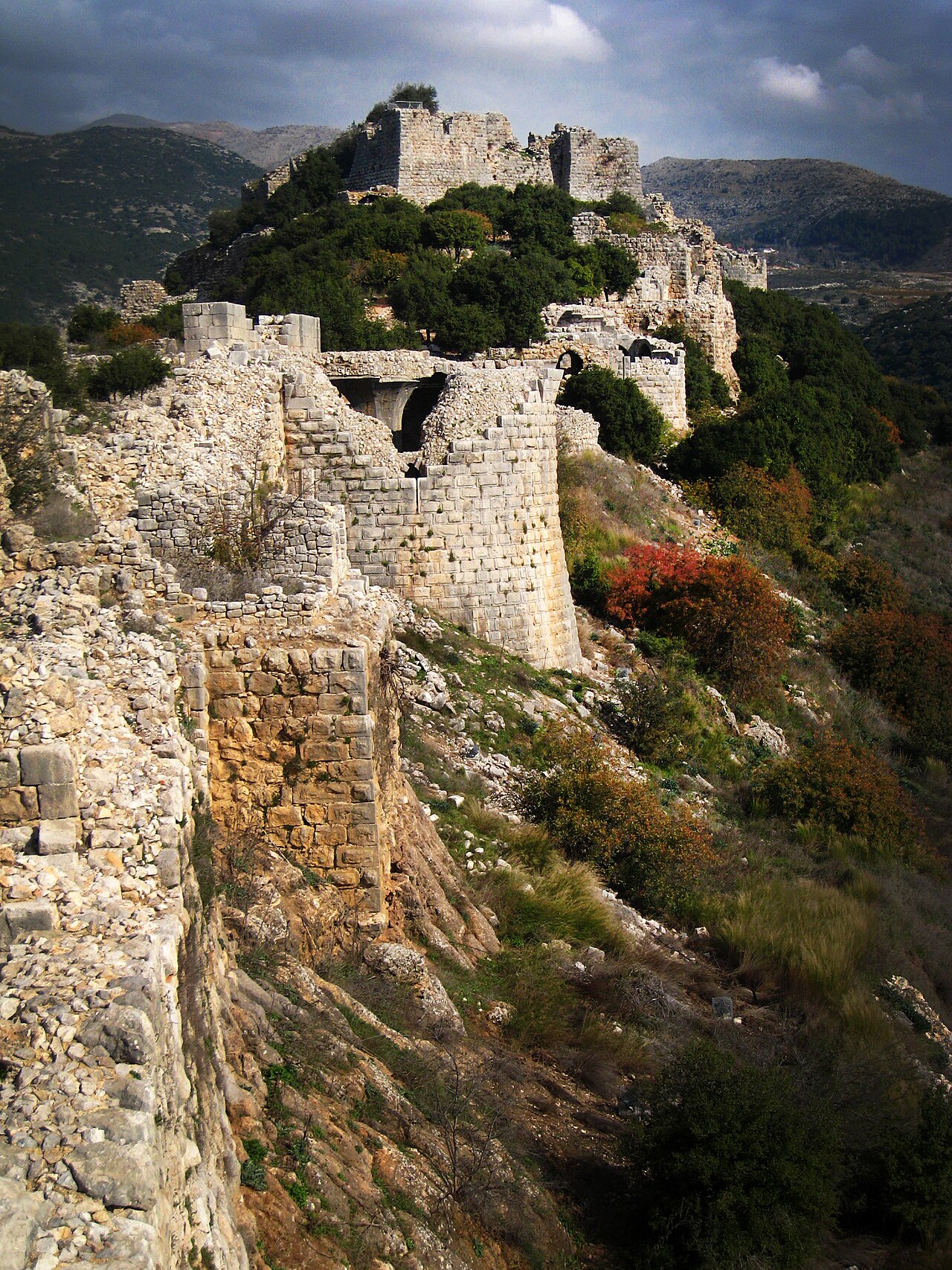

The story of this place
The fortress was developed under Ayyubid rulers and enlarged by the Mamluks to protect a strategic approach toward Damascus. Its later association with the biblical Nimrod is a naming tradition, not a construction date. The long ridge allowed successive builders to create a formidable sequence of towers and defended spaces.
What to notice
Follow how the walls respond to changes in height and width along the ridge. Inscriptions and distinctive towers can help identify different building phases. Comparing the design with Belvoir or Montfort is useful precisely because their builders and strategic circumstances were different.
Planning a visit
Expect substantial uneven walking, stairs and exposed sections. Check current access and visibility before making the ascent; mist or severe weather can change the experience. The fortress stands in the Israeli-administered Golan Heights, internationally recognised as occupied Syrian territory. A nearby Banias visit is a separate stop with its own entrance arrangements.
Continue exploring
These places offer a geographical or historical connection. They are reading suggestions, not a pre-checked one-day route.
Sources & further reading
Editorial review: 20 November 2026. This is a researched introduction, not a report of an on-site inspection. Historical sources do not confirm current opening or access; check with the responsible operator before travelling.