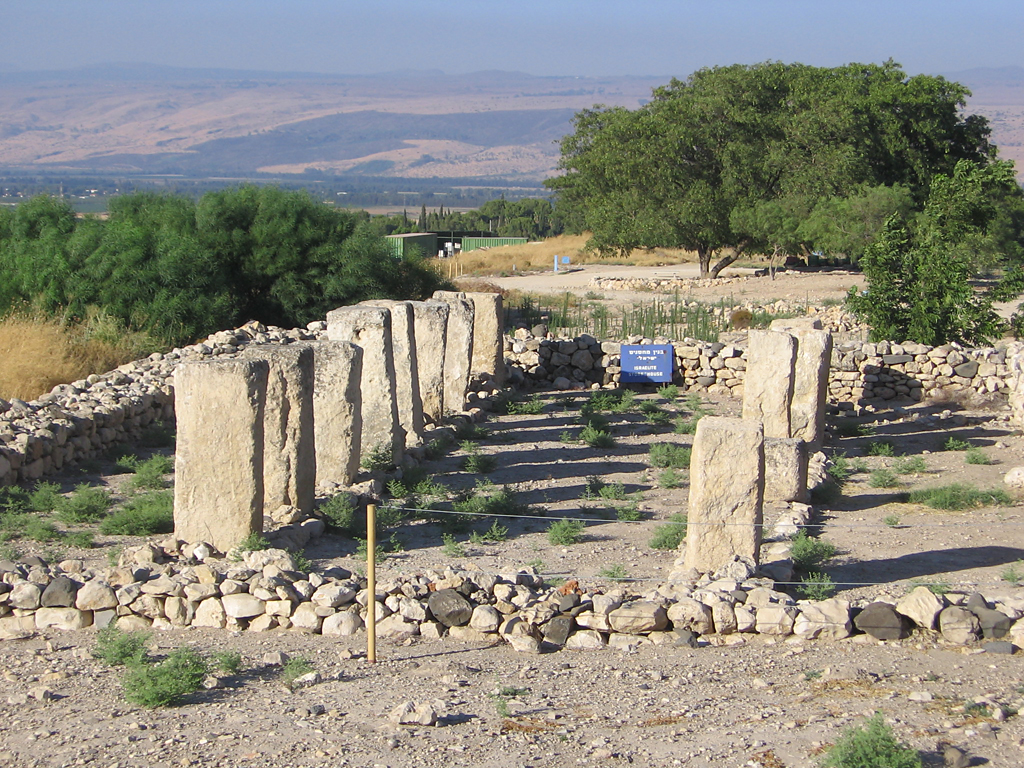

The story of this place
The Bronze Age settlement consisted of an upper city and an extensive lower city, with connections reaching beyond Galilee. Later occupation added Israelite fortifications and infrastructure. Destruction layers are important evidence, but connecting each one with a named biblical event requires interpretation rather than certainty from a wall alone.
What to notice
Begin by distinguishing the upper mound from the much larger lower-city area. Ceremonial structures, defensive works and the deep water system tell different stories about authority and survival. The breadth of the landscape matters as much as the most photogenic surviving stones.
Planning a visit
Decide how much uneven ground and stair climbing your group can manage. Check park notices for the water system and any restricted excavation areas. Hazor fits an Upper Galilee history route; the coast and southern Galilee require additional travel, even when they appear close on a small map.
Continue exploring
These places offer a geographical or historical connection. They are reading suggestions, not a pre-checked one-day route.
Sources & further reading
Editorial review: 20 November 2026. This is a researched introduction, not a report of an on-site inspection. Historical sources do not confirm current opening or access; check with the responsible operator before travelling.