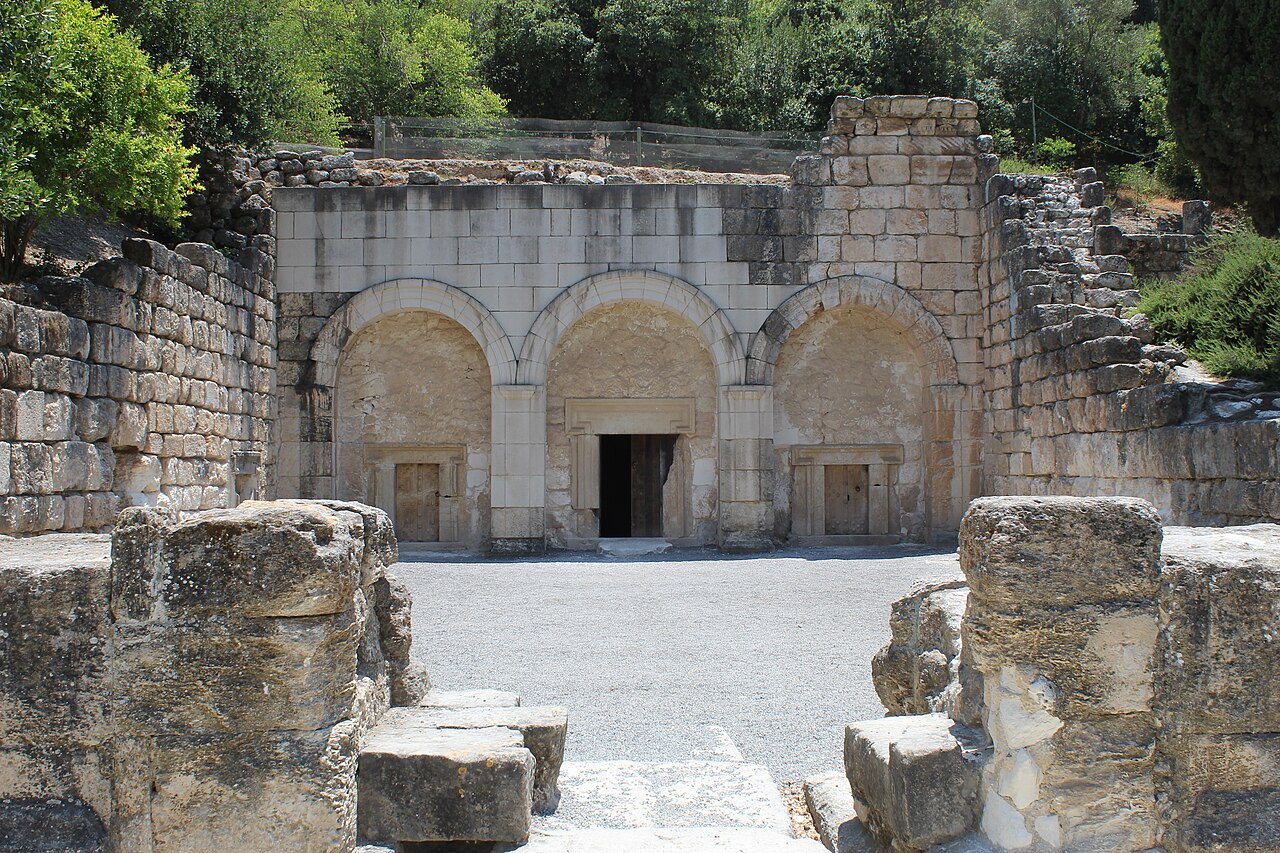

The story of this place
The necropolis flourished in the Roman period and is closely associated with the memory of Judah the Patriarch. Its inscriptions, sarcophagi and imagery reveal a community far more varied than a single language or decorative style suggests. UNESCO recognition concerns this remarkable funerary heritage, not a claim that every tomb's occupant is known.
What to notice
Choose a manageable sequence of caves and look closely at inscriptions and carved symbols. The contrast between burial chambers and the landscape above helps explain why the site differs from an open settlement excavation. Some details need interpretation to be distinguished from later damage or restoration.
Planning a visit
Check which caves are open and ask about steps, lighting and enclosed spaces before arranging a visit with mobility concerns. Respect the funerary character of the site. A comparison with another ancient synagogue or Galilean settlement can place its Jewish heritage in a wider social context.
Continue exploring
These places offer a geographical or historical connection. They are reading suggestions, not a pre-checked one-day route.
Sources & further reading
Editorial review: 20 November 2026. This is a researched introduction, not a report of an on-site inspection. Historical sources do not confirm current opening or access; check with the responsible operator before travelling.