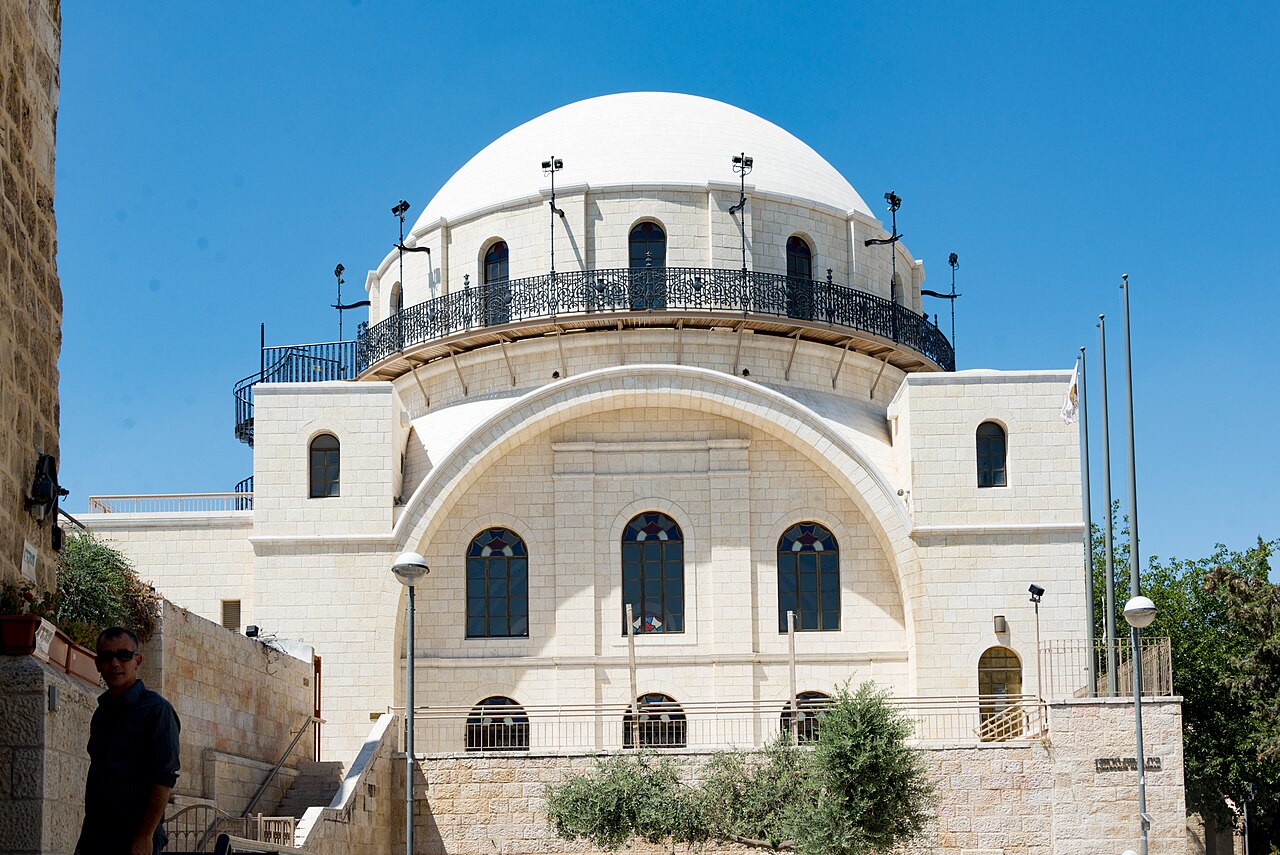

The story of this place
The name means ruin and reflects more than one phase of loss. The prominent synagogue seen today is a reconstruction following the destruction of its predecessor in 1948. Its story cannot be reduced to the age of the present walls: earlier foundations, community aspirations and later rebuilding all contribute to its significance.
What to notice
Look at the relationship between the synagogue's monumental form and the narrower streets around it. Inside, interpretation of its rebuilding helps distinguish restored appearance from surviving fabric. Any elevated viewing area should be treated as a separate part of the visit whose access needs confirmation.
Planning a visit
Check visitor and prayer arrangements rather than assuming that a synagogue operates throughout the day as a museum. It combines well with the Ramban and Four Sephardic Synagogues, allowing a comparison of community histories within a small area. Respect services and avoid blocking the quarter's busy lanes.
Continue exploring
These places offer a geographical or historical connection. They are reading suggestions, not a pre-checked one-day route.
Sources & further reading
Editorial review: 20 November 2026. This is a researched introduction, not a report of an on-site inspection. Historical sources do not confirm current opening or access; check with the responsible operator before travelling.